
It is probably not rust
Brown or orange streaks on concrete directly under a wood gate, fence or deck edge are most often tannins. Woods like redwood and cedar, which are common on LA fences and gates, contain natural compounds that dissolve in water. When rain or sprinklers soak the wood, those compounds drip off the bottom edge and dye the concrete. Dark semi-transparent or oil-based wood stain can run off the same way, especially on a recently stained gate.
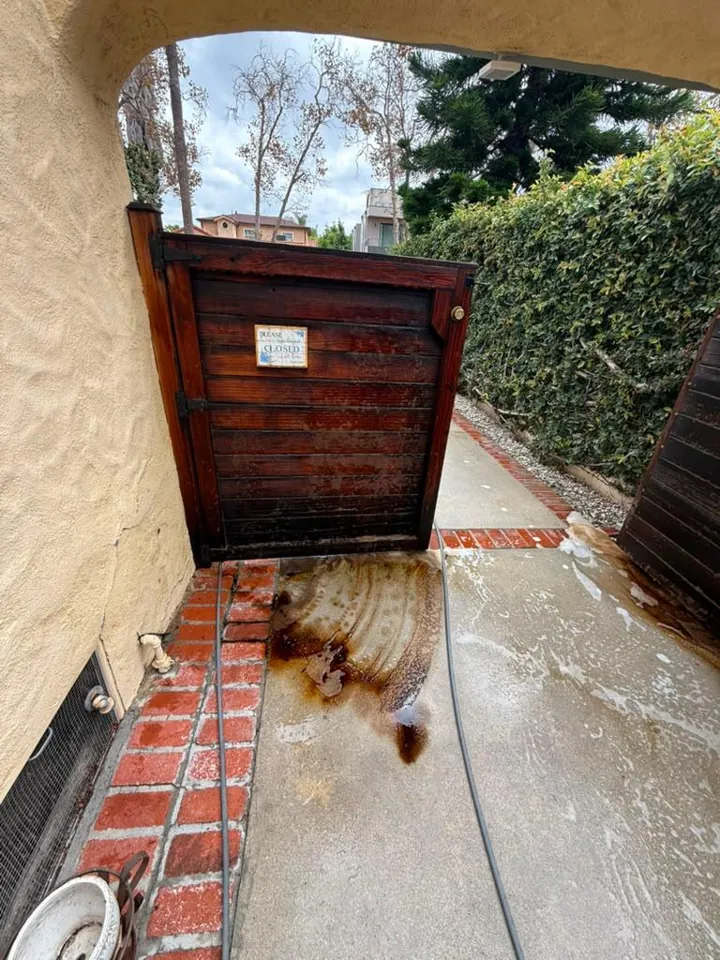
The stain sits along the drip line, follows the shape of the gate or the boards above it, and looks like weak tea that has dried. It often fans out where water flowed across the concrete.
How to tell tannin from rust
Rust tends to be a sharper orange and shows up as spots or trails that start at metal: hinges, latches, nails, bolts or a metal post. If you can trace the stain to a piece of hardware, treat it as rust. Our guide on rust stains on concrete covers that.
Tannin stains are browner, softer at the edges, and line up under the wood itself rather than the hardware. Many gates have both, with tannin across the bottom and a small rust trail under a hinge, and each needs its own treatment.
A simple check helps. Wet the stain and look closely. Rust often shows small, darker orange centers where the metal dripped. Tannin is more even and usually fades a little when exposed to strong sun over time, while rust stays put.
A real example
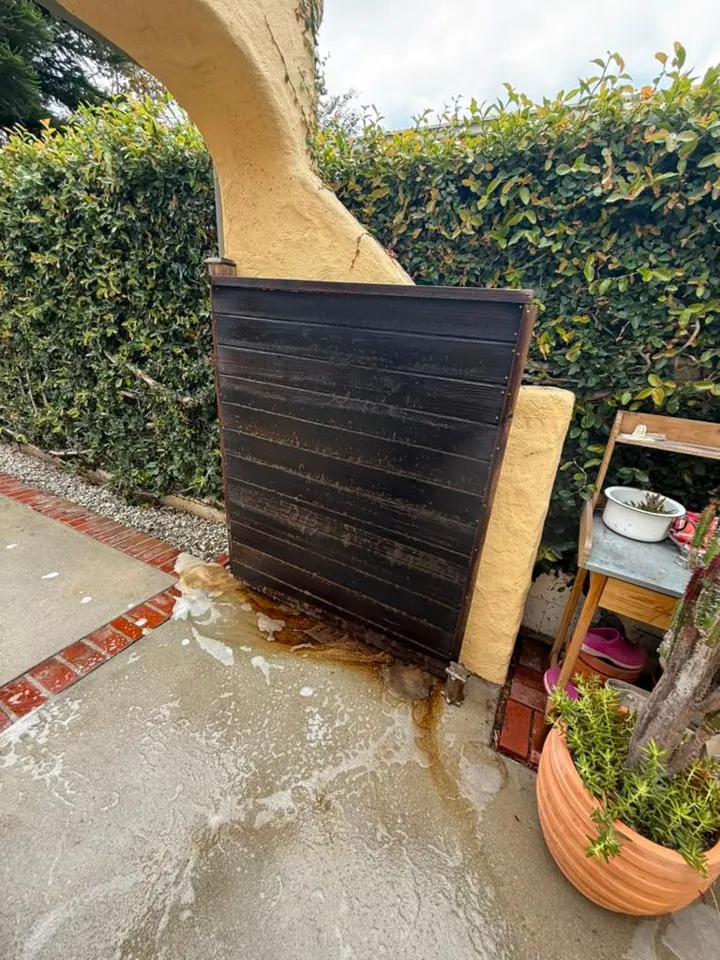
The photos on this page come from one of our jobs: a dark-stained wood gate set under a stucco arch. Before cleaning, the concrete below the gate had a brown runoff stain that looked a lot like rust. During cleaning, the gate panel was cleaned first, and you can see how much color came off the wood itself. That is the same material that had been dripping onto the concrete.
Clean the wood first, the concrete last
Order matters. Cleaning a wood gate releases more tannin and loose stain, and that runoff lands right on the concrete below. If you clean the concrete first, you can stain it again within minutes. Work top down: wood first, then the surrounding wall if needed, and the concrete last.
On the wood, use a wood cleaner, low pressure and a wide spray pattern that follows the grain. High pressure raises fibers and can strip an existing finish unevenly. Rinse well so the cleaner does not keep dripping.
On the concrete, tannin usually responds to an oxalic acid based wood brightener or a cleaner made for organic stains, applied and allowed to dwell before a thorough rinse. Test a small area first, since any acid product can affect some finishes. Old, heavy stains may lighten rather than vanish, though sun often fades what is left over the following weeks.
Preventing it from coming back
Keep sprinklers off the gate and fence. Daily watering keeps pulling tannin out of the wood. After staining or sealing a gate, let the finish cure fully before it gets wet, and wipe drips off the concrete while they are fresh. A sealed wood surface releases less tannin than bare wood, so keeping the finish maintained helps.
Sealing the concrete below makes new runoff easier to rinse off before it soaks in. During the rainy season, a quick rinse of the concrete after a storm keeps fresh tannin from setting.
If you are restaining a gate, ask whoever does the work to protect the concrete with plastic sheeting and to keep stain from pooling at the bottom edge, which is where most runoff starts.
What it costs to handle both
Because the gate and the concrete are connected problems, it helps to clean them in the same visit. As of October 2026, fence cleaning on our calculator is $2.15 per linear foot and walkway cleaning is $0.55 per square foot, with a $195 visit minimum. Booking two services in one visit earns a 5% bundle discount.
Say Wash It confirms the flat price before work begins, and the walkthrough at the end lets you see the gate and the concrete together once they are clean.
Key points
It is probably not rust
Brown or orange streaks on concrete directly under a wood gate, fence or deck edge are most often tannins. Woods like redwood and cedar, which are common on LA fences and gates, contain natural compounds that dissolve in water. When rain or sprinklers soak the wood, those compounds drip off the bottom edge and dye the concrete. Dark semi-transparent or oil-based wood stain can run off the same way, especially on a recently stained gate.
Clean the wood first, the concrete last
Order matters. Cleaning a wood gate releases more tannin and loose stain, and that runoff lands right on the concrete below. If you clean the concrete first, you can stain it again within minutes. Work top down: wood first, then the surrounding wall if needed, and the concrete last.