
Shade is the problem
Any hard surface that stays damp and out of direct sun grows a film of algae. On a north-facing patio or under a tree canopy it develops in a single season. It's slick when wet and it's the most common cause of falls around pools and side yards.
Pavers need sand replaced
Cleaning between pavers removes the joint sand along with the growth. Left unfilled, pavers shift and weeds take hold. Re-sanding is what keeps the surface stable, and most companies skip it.
Wood decking is not concrete
Decking cleans at a fraction of the pressure concrete takes, worked along the grain. Too much pressure raises the fibres and leaves a furry surface that traps dirt faster than before.
Pool surrounds are the priority
Wet feet, hard surfaces and no handrail make a pool deck the highest-risk surface on a residential property. Whatever's used has to be pool-safe and properly controlled so it doesn't sheet into the water.
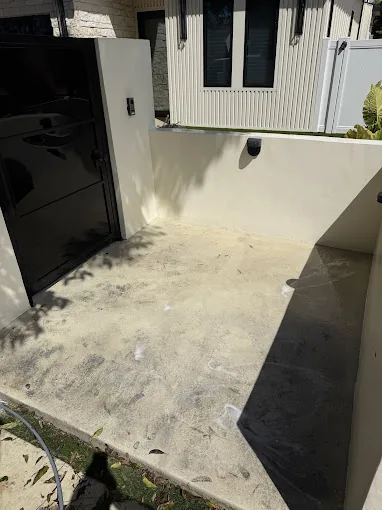
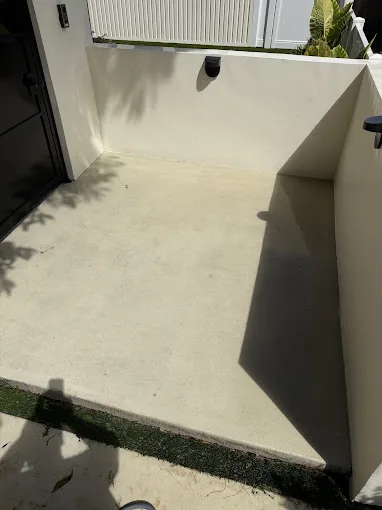
A real job, before and after
The same entryway concrete, photographed before and after a single visit. No filter, no different angle — this is an actual Say Wash It job.
Common questions
Can you clean pool decks?
Yes, and it's one of the most worthwhile jobs we do. A slick pool deck is the highest-risk surface on a residential property.
Do you re-sand pavers?
Yes, on request. Mention it when you request your quote.
Will cleaning damage my wood deck?
Not at the correct pressure. Wood is cleaned far more gently than concrete and always along the grain.
What about travertine and natural stone?
Stone is softer than concrete and often sealed. It gets treated as stone, with lower pressure and different chemistry.