
Concrete is a sponge
Concrete looks solid, but it is full of tiny pores. Over time, fine dust, tire residue, pollen, soot and organic film settle into those pores. The surface gradually darkens from light gray to a dull charcoal, so slowly that most people do not notice until a cleaned strip sits next to an uncleaned one.
A hose rinse moves loose dirt on top but barely touches what is lodged in the pores. Professional cleaning combines a cleaning solution that loosens that material with enough even, controlled pressure to flush it out.
Organic growth is a big part of the gray
In shaded areas, much of the dark color is living. Mildew, algae and similar growth form a thin film, especially along side yards, under trees and on north-facing paths that never fully dry. Pressure alone can strip the top of that film but often leaves the stain behind.
That is why pre-treatment matters. A cleaning solution applied first and left to dwell breaks down the growth so the rinse can carry it away. A post-treatment on heavily shaded areas helps slow its return. Tree-shadow patterns and dark patches in shady spots often disappear completely once the growth is gone.
Along brick borders and joints, dirt and growth sit in the grooves. Detailing those edges by hand is part of why the whole area reads as clean rather than just the open slab.
Even cleaning, even color
Brightness only looks good if it is uniform. A hand wand used across a large slab tends to leave stripes and swirl marks, because the distance and angle keep changing. A rotary surface cleaner holds spinning jets at a fixed height inside a hood, so every pass gets the same force.
Passes are overlapped, edges and borders are detailed by hand, and the whole area is rinsed top down and toward a controlled point. The goal is one consistent color from end to end, not a clean stripe next to a dirty one.
Why it looks blotchy while wet
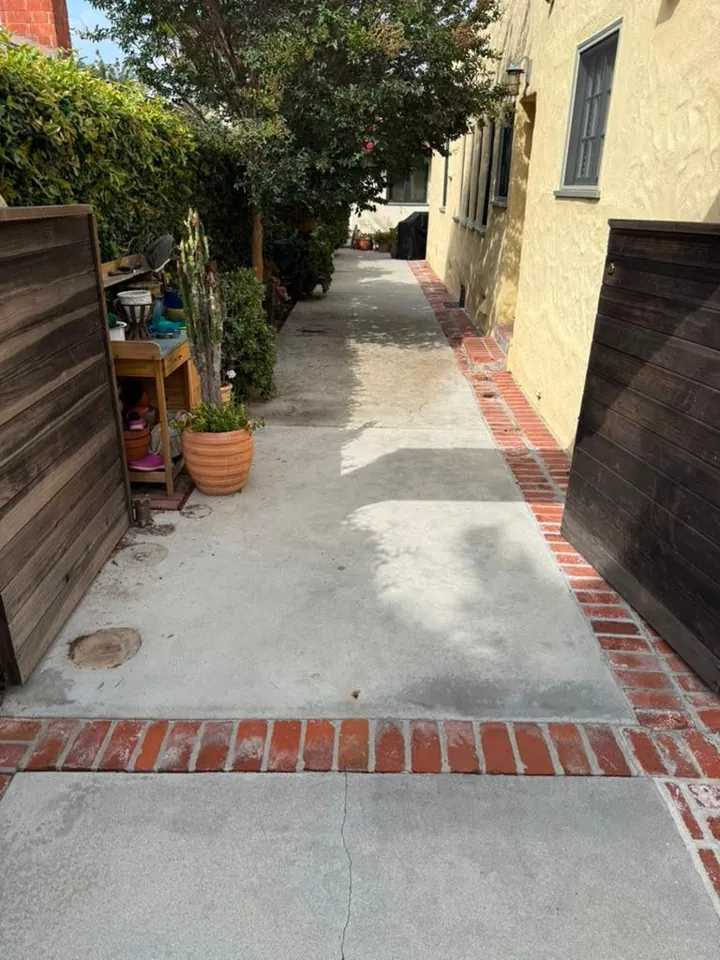
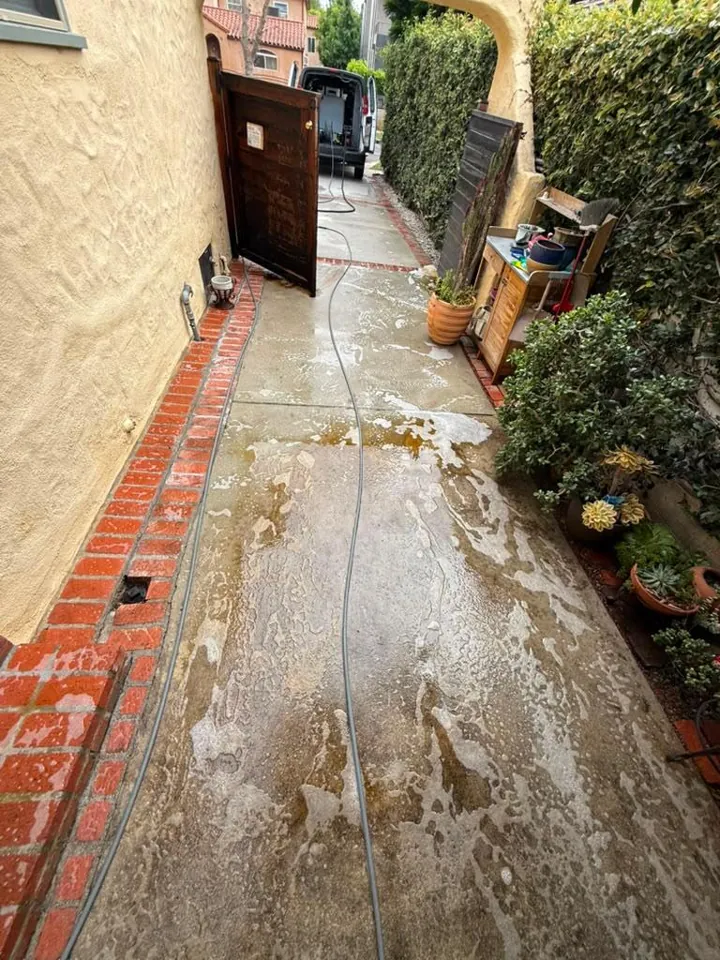
Right after rinsing, concrete often looks darker and patchy. Water fills the pores and darkens the surface, and different areas drain and dry at different rates. Low spots, shaded corners and joints hold water longer. That uneven darkness is moisture, not leftover dirt.
Give it time. In full sun on a warm day the surface can dry fairly quickly. A shaded side yard may take much of the afternoon, longer on a cool marine layer morning near the coast. The photos on this page show the same walkway wet just after rinsing and dry in the sun, and the difference is mostly water.
Pressure is not what makes it bright
A common assumption is that the brighter result comes from blasting harder. It does not. Too much pressure etches the surface, exposes the stone underneath, and can leave a rougher texture that collects dirt faster. Wand marks from close-up spraying show as light stripes that do not fade.
The brightness comes from loosening the dirt chemically, flushing it out evenly, and rinsing thoroughly so nothing redeposits. That is why a cleaning done right can make old concrete look much lighter without changing its texture.
What brightening will not do
Cleaning reveals the concrete you have. If a slab was poured in sections, they may dry to slightly different shades. Patches and repairs may look different from the original pour. Deep oil, rust and fertilizer stains may lighten without disappearing. Etching from past acid use or old pressure damage can show more clearly once dirt is gone.
Brighter is also not the same as new. Older concrete has some exposed aggregate and texture from wear, and that remains after cleaning.
Keeping the result
The bright look lasts longest when you keep debris swept, aim sprinklers away and catch spills early. Shaded areas will regrow film faster than sunny ones. A penetrating sealer can slow down how quickly dirt soaks back in.
Hard water can matter too. If sprinklers hit the concrete, mineral spots can build up over the clean surface. Aiming them away keeps the color even.
As of October 2026, walkway and sidewalk cleaning is $0.55 per square foot and driveway cleaning is $0.50 per square foot on our calculator, with a $195 visit minimum. The flat price is confirmed before work begins.
Key points
Concrete is a sponge
Concrete looks solid, but it is full of tiny pores. Over time, fine dust, tire residue, pollen, soot and organic film settle into those pores. The surface gradually darkens from light gray to a dull charcoal, so slowly that most people do not notice until a cleaned strip sits next to an uncleaned one.
Why it looks blotchy while wet
Right after rinsing, concrete often looks darker and patchy. Water fills the pores and darkens the surface, and different areas drain and dry at different rates. Low spots, shaded corners and joints hold water longer. That uneven darkness is moisture, not leftover dirt.