
Why plants love concrete joints
Control joints and cracks are narrow channels that collect wind-blown dust, leaf litter and grit. Over time that turns into a thin strip of soil. Add moisture from sprinklers, morning dew or a shaded spot that never dries, and seeds and moss spores have everything they need.
In LA, the worst areas are usually shaded side yards, north-facing walkways, and driveways next to lawns or planters. Growth often surges after the rainy season from roughly November through March, when joints stay damp for weeks.
Moss usually means constant moisture and little sun. Weeds mean the joint has collected enough soil for roots. Both tell you the joint has become a planter, and simply killing what is growing does nothing about the soil and water that let it grow in the first place.
Cleaning joints without damaging the slab
Pull the larger weeds by hand first, getting as much root as you can. Then pre-treat the area with a cleaning solution that targets organic growth, and give it time to dwell. This loosens moss and the film that grows alongside it.
Next, use a narrow-angle nozzle aimed along the joint, not across it, to flush out soil and roots. Keep the nozzle moving and a reasonable distance from the surface, because concentrated pressure can chip the edges of the joint and widen it. The main slab is then cleaned with a surface cleaner and rinsed from the top down, so loosened soil does not resettle.
Expect a messy rinse. Joints release a lot of dirt, and that sediment should be swept up rather than washed to the gutter. Los Angeles Municipal Code section 64.70.02 prohibits discharging untreated wash water from paved-surface washing into the storm drain system.
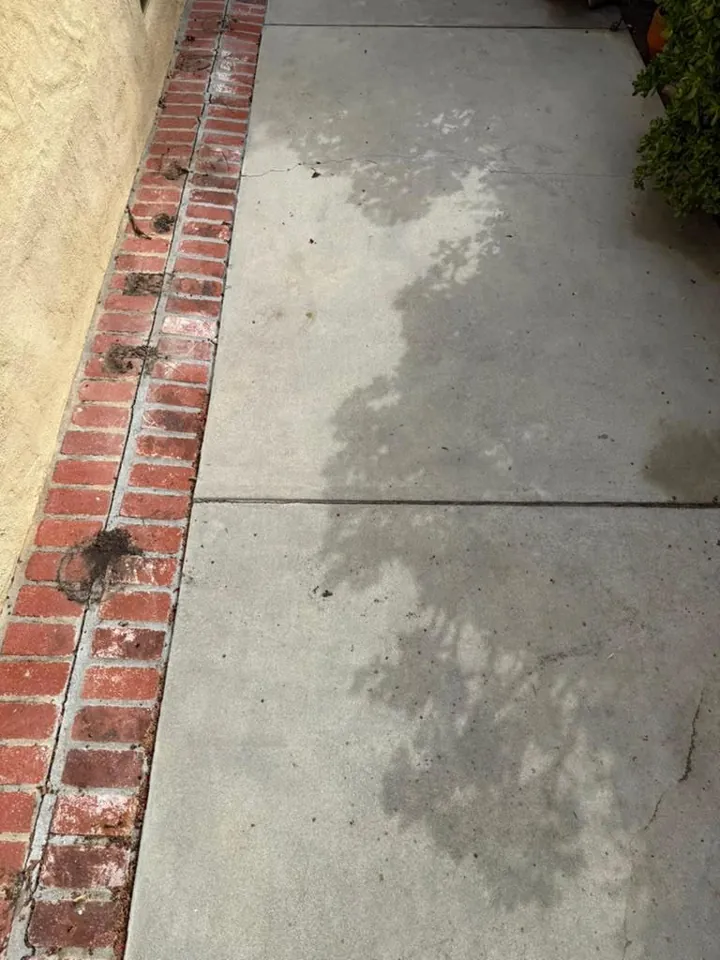
Filling joints after cleaning
A clean, empty joint will fill with dust and seeds again within months. Filling it is what makes the result last. For control joints in driveways and patios, a flexible, self-leveling polyurethane or silicone joint sealant is a common choice. It keeps out dirt and water while letting the slab move.
Let the joint dry fully before filling, which in summer may be the same day and in winter can take longer. For pavers, the right fill is joint sand, often polymeric sand. Our paver cleaning and re-sanding guide covers that process.
Cracks are a different question
Hairline cracks can be cleaned and sealed with a crack filler. Wide cracks, cracks where one side is higher than the other, and areas where the slab is sinking are signs of movement or a failing base. Cleaning them out may make them more visible. They need repair or replacement, and no amount of washing will stop plants returning if the gap keeps opening.
Roots from nearby trees can also lift and crack slabs. If weeds are growing in cracks that keep widening, it is worth having someone look at the cause.
Slowing regrowth
Reduce moisture first. Adjust sprinklers so they do not hit paving, fix drainage in low spots and trim plants that keep areas shaded and damp. Sweep or blow out joints a few times a year so soil does not build up.
A penetrating sealer on the slab after cleaning can slow organic growth on the surface. Some owners also spot-treat joints with a vinegar-based or commercial weed treatment. Be careful around lawns and planters, since anything that kills weeds can harm neighboring plants.
Timing helps too. Cleaning and filling joints in late summer or early fall, while the concrete dries quickly, gets the work done before winter rains bring a new wave of seeds and spores. A quick check each spring catches anything that sneaks back in.
Cost and what to expect
As of October 2026, driveway cleaning on our calculator is $0.50 per square foot and walkways are $0.55 per square foot, with a $195 minimum per visit. Booking both together takes 5% off. Joint filling is a separate step, and we will tell you if a joint or crack looks like it needs repair instead.
At Say Wash It we pull and flush the joints as part of cleaning, then walk the area with you at the end so you can see which joints are ready to seal. The flat price is confirmed before work begins.
Key points
Why plants love concrete joints
Control joints and cracks are narrow channels that collect wind-blown dust, leaf litter and grit. Over time that turns into a thin strip of soil. Add moisture from sprinklers, morning dew or a shaded spot that never dries, and seeds and moss spores have everything they need.
Filling joints after cleaning
A clean, empty joint will fill with dust and seeds again within months. Filling it is what makes the result last. For control joints in driveways and patios, a flexible, self-leveling polyurethane or silicone joint sealant is a common choice. It keeps out dirt and water while letting the slab move.