
Efflorescence: salts coming out of the masonry
Brick, block, mortar and concrete contain natural salts. When water moves through the material and evaporates at the surface, it leaves those salts behind as a white, powdery or crusty deposit. It is common where masonry meets the ground or where sprinklers and rain keep it damp.
Hard water marks: minerals from sprinklers
Los Angeles water is hard. When sprinkler spray dries on walls and concrete, it leaves white mineral spots and arcs, often in a pattern that matches the sprinkler head.
How to tell them apart
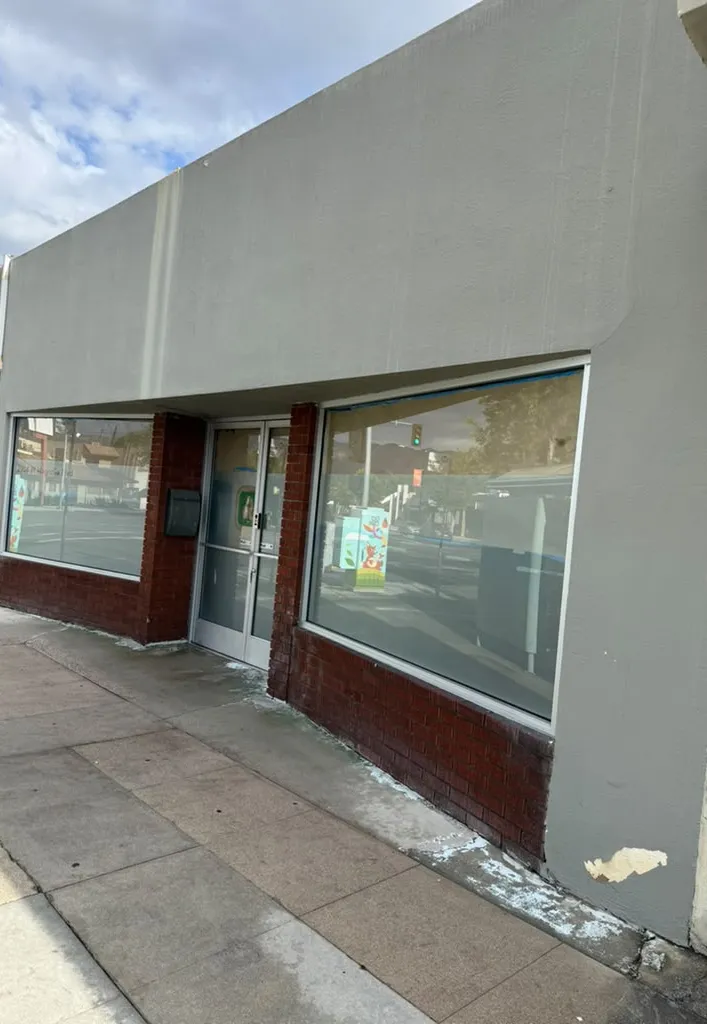
Efflorescence tends to appear along the base of a wall, around mortar joints or in patches on a slab, and it can come back after cleaning while the masonry is still wet. Hard water marks follow the spray pattern of the irrigation.
How they are removed
Light deposits often come off with brushing and a rinse. Heavier deposits need a cleaner made for masonry, applied and rinsed carefully. High pressure alone can damage mortar and brick faces, so the method has to match the material.
Stopping them from coming back
Both problems are about water. Adjust sprinklers so they do not hit walls, fix drainage that keeps masonry wet, and check for leaks. Removing the deposit without fixing the moisture source means it will return.
Key points
How to tell them apart
Efflorescence tends to appear along the base of a wall, around mortar joints or in patches on a slab, and it can come back after cleaning while the masonry is still wet. Hard water marks follow the spray pattern of the irrigation.
Stopping them from coming back
Both problems are about water. Adjust sprinklers so they do not hit walls, fix drainage that keeps masonry wet, and check for leaks. Removing the deposit without fixing the moisture source means it will return.