
The safe approach in one paragraph
Pre-wet the brick, apply a masonry-safe cleaning solution, let it dwell a few minutes, scrub the joints with a stiff nylon brush, and rinse with a wide fan tip held at a distance. Brick itself is fairly tough, but mortar is softer and older mortar can be fragile. Sand-set brick, with no mortar at all, is even easier to wash out. Gentle chemistry and agitation do the work. Pressure only rinses.
If you want the concrete next to the brick cleaned with a surface cleaner, run it on the concrete and treat the brick border separately by hand. A rotary cleaner riding over a brick ribbon can catch edges and spray hard into the joints.
Why brick borders get so dirty
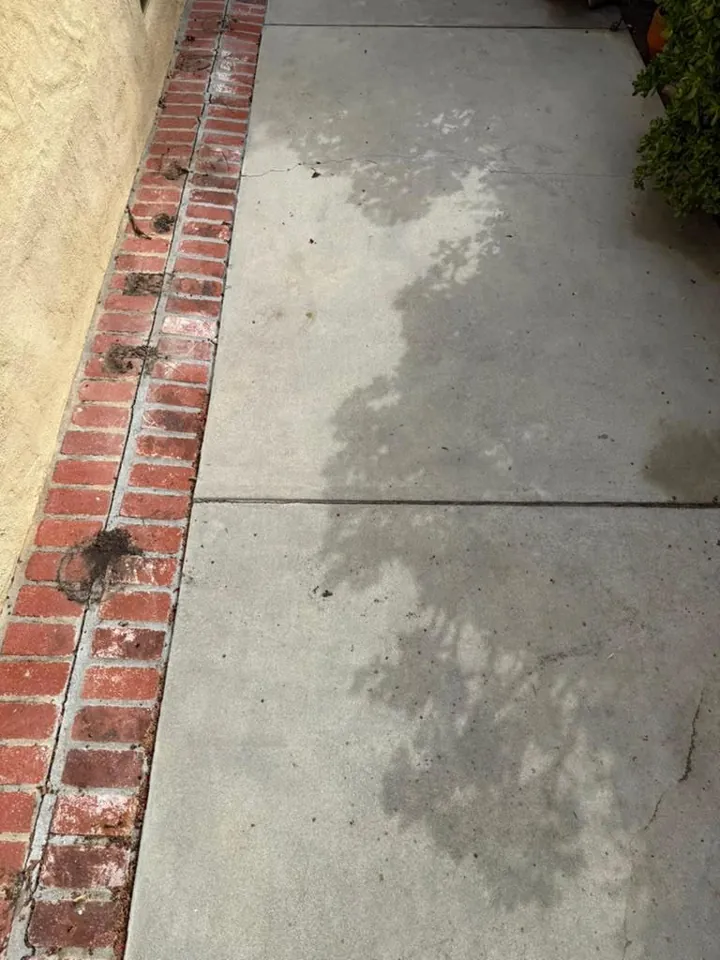
Brick ribbons along driveways and walkways are common on LA homes, especially older Spanish and traditional styles. The border sits slightly lower or rougher than the concrete beside it, so it catches runoff, soil from planters and leaf debris. Joints hold moisture after sprinklers run, which feeds moss and dark organic growth. In shaded side yards, the border is often the dirtiest part of the walkway.
The photos on this page come from one of our side-yard jobs. Before cleaning, the brick border was packed with dirt and the joints were dark, while the concrete beside it showed tree-shadow staining. After cleaning, the brick color came back and the joints were clear, without washing them out.
How mortar gets damaged
A narrow tip aimed along a joint can cut a groove in mortar in seconds. Once mortar recedes, the brick edges are exposed, water gets behind them, and bricks can loosen over time. Sand-set borders lose their joint sand and start to shift. Damage is easy to miss while the surface is wet and shows up later as gaps and wobble.
Before cleaning, check the joints. Crumbling mortar, missing sections or loose bricks mean the border needs repointing or resetting, and you should clean very lightly or wait until after repair. For pavers with sand joints, our paver cleaning and re-sanding guide covers refilling after the wash.
White haze after cleaning? That is efflorescence
Brick and mortar contain soluble salts. When water soaks in and then evaporates, it carries those salts to the surface, leaving a white, powdery haze. Washing can trigger this, especially if the brick stays wet for a long time. It is not damage, and light efflorescence often brushes off once dry.
Heavier or recurring white deposits need a different approach than regular washing. Our guide to white stains on brick and concrete explains efflorescence, why acid products should be used carefully on brick, and how to keep it from returning.
Moss, weeds and dark growth in the joints
Pull weeds by hand rather than blasting them out, because roots pull mortar and sand with them under pressure. For moss and dark growth, a diluted soft wash solution with a dwell time does more than pressure ever will. Keep it from drying on the surface in sun, and rinse nearby plants before and after.
Prevention matters more than technique here. Redirect sprinklers that hit the border, trim plants that drip onto it, and keep soil from planters from washing onto the brick in the rainy season.
Brick also stains from what sits on it. Clay or metal planters leave rings, and rusty tools or furniture feet leave orange marks that a general cleaner will not remove. Lift pots onto feet or saucers, and treat rust as its own stain rather than trying to wash it out with pressure. A rust-specific cleaner, tested on a small area first, is the safer route on brick.
When to get help
A short brick ribbon is a manageable DIY job with a bucket, a brush and a hose. Long borders, combined brick and concrete walkways, or old mortar you are nervous about are where experience counts. Say Wash It handles brick borders by hand alongside the concrete. As of October 2026, walkway and sidewalk cleaning is $0.55 per square foot, with a $195 minimum per visit, and the flat price is confirmed before we start.
Key points
The safe approach in one paragraph
Pre-wet the brick, apply a masonry-safe cleaning solution, let it dwell a few minutes, scrub the joints with a stiff nylon brush, and rinse with a wide fan tip held at a distance. Brick itself is fairly tough, but mortar is softer and older mortar can be fragile. Sand-set brick, with no mortar at all, is even easier to wash out. Gentle chemistry and agitation do the work. Pressure only rinses.
How mortar gets damaged
A narrow tip aimed along a joint can cut a groove in mortar in seconds. Once mortar recedes, the brick edges are exposed, water gets behind them, and bricks can loosen over time. Sand-set borders lose their joint sand and start to shift. Damage is easy to miss while the surface is wet and shows up later as gaps and wobble.