
Why trees leave stains on concrete
Leaves, seed pods and bark contain tannins, natural compounds that act like tea. When wet leaves sit on concrete, the tannins leach out and soak into the pores, leaving brown or orange prints in the exact shape of the leaf. Oak, magnolia and many street trees common in LA are known for it.
The second kind of tree stain is less obvious. Under a canopy, concrete stays damp longer after sprinklers, dew or rain. That moisture, plus a steady supply of fine organic debris, lets a thin gray, green or black film grow on the surface. Over time it darkens the concrete in patterns that follow the shade, which is why some walkways end up with dark shapes that look like the shadow of the tree above them.
Tannin stains vs shade growth: how to tell them apart
Tannin stains are brown, orange or rust colored, often with crisp leaf outlines. They appear quickly, sometimes after a single rain, and they show up in sun as well as shade.
Shade growth is gray to black, sometimes greenish, with soft edges. It builds slowly over months, and it is worst in the spots that get the least sun and the most water. It often feels slightly slick underfoot. The two often appear together on the same slab, and each needs slightly different chemistry.
A real side-yard example
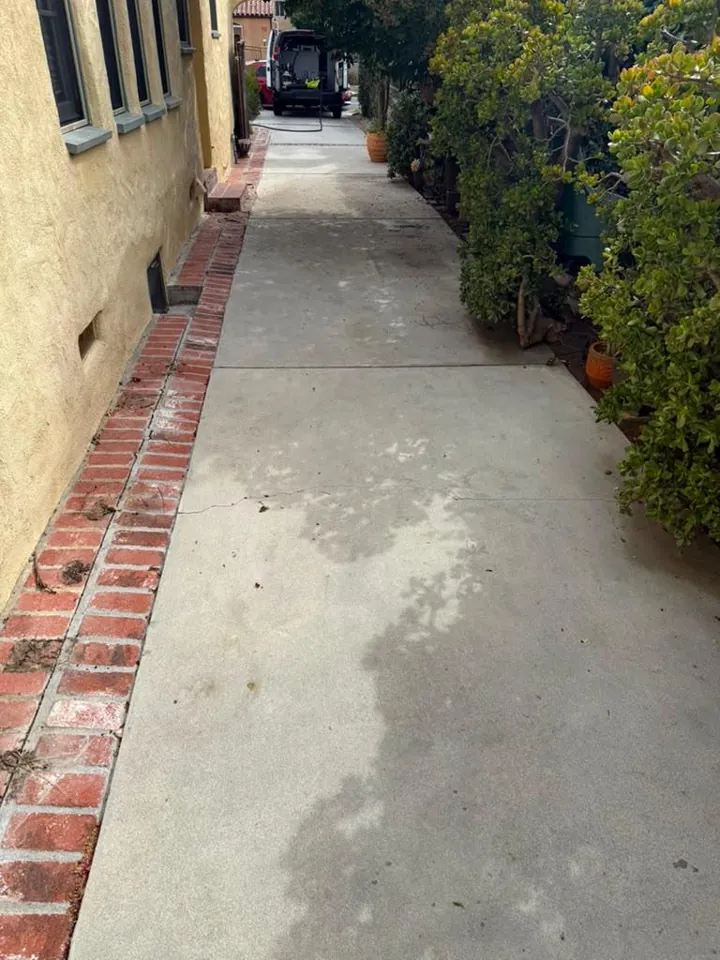
The photos on this page come from a long, shaded side-yard walkway along a stucco house, with a red brick border on one edge and plants on the other. Before cleaning, the concrete was a flat gray with darker patches that followed the shape of the tree shadows, and dirt had packed into the brick border.
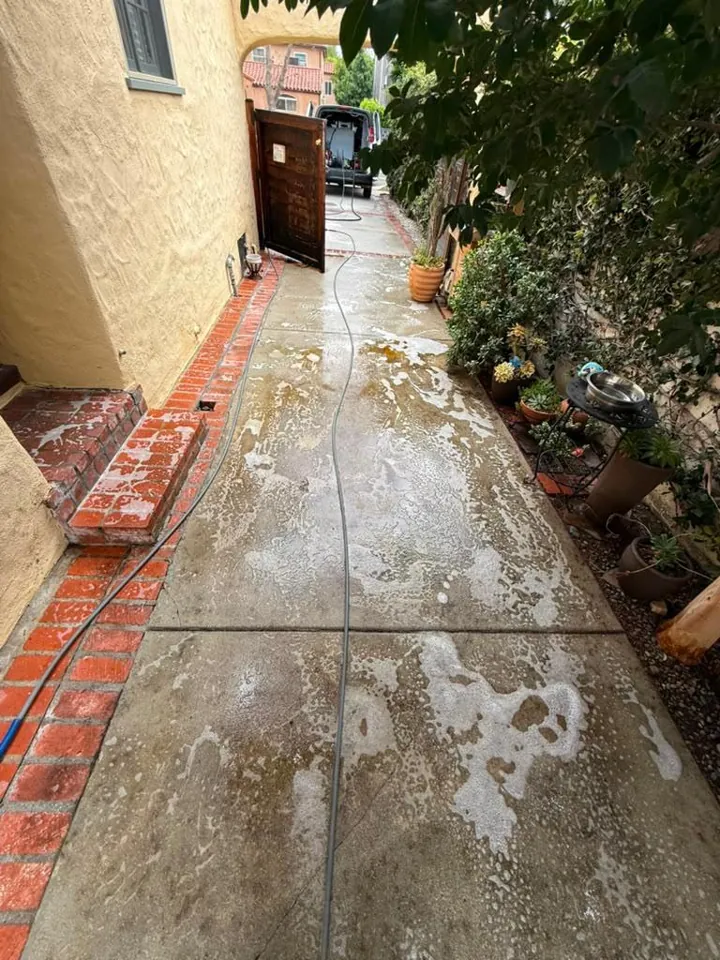
During cleaning, the pre-treatment foamed on the surface and the runoff came off brown as the film and embedded dirt lifted. After rinsing, the concrete was an even, lighter color end to end, both wet right after the rinse and dry in the sun. That evenness is what you want from a shade-stained walkway: not just cleaner spots, but no more tree-shaped patterns.
The cleaning method
Start by blowing or sweeping off leaves and debris, including from the joints and border. Wet nearby plants. Apply a pre-treatment matched to what you see: a cleaner suited to organic growth for the dark shade film, and an oxygen-based or tannin-specific cleaner for brown leaf prints. Let it dwell long enough to work, keeping it from drying on the surface, which is easier in a shaded side yard than on a sunny driveway.
Clean the open concrete with a rotary surface cleaner for an even result, then detail the edges and the brick border with a wand at a safe distance and a wide tip, so mortar is not damaged. Rinse from the high end to the low end. Keep wash water out of the storm drain; Los Angeles Municipal Code section 64.70.02 prohibits discharging untreated wash water from paved-surface washing into the storm drain system.
What to expect
Shade film usually comes off completely, and the result can look dramatic. Fresh tannin stains also clean up well. Old tannin stains that have soaked in for many seasons may lighten a lot but leave a faint ghost. Sunlight keeps fading those after cleaning, so they often look better a few weeks later than on the day of the job.
Brick borders are a little different from the concrete. Brick is porous and the mortar is softer, so cleaning stays gentle there. Dirt in the joints comes out well, but brick that has darkened with age will look cleaner rather than new. Cracked or missing mortar is a repair job, and cleaning will make it easier to see.
Keeping it from coming back
Clear leaves before rain or sprinklers soak them, especially in fall and in the rainy season from about November to March. Adjust sprinklers that hit the walkway. If you can thin the canopy, more sun and airflow slow the film. Even so, shaded side yards tend to need cleaning more often than sunny driveways. Our side-yard before and after post walks through this same job in more detail.
Key points
Why trees leave stains on concrete
Leaves, seed pods and bark contain tannins, natural compounds that act like tea. When wet leaves sit on concrete, the tannins leach out and soak into the pores, leaving brown or orange prints in the exact shape of the leaf. Oak, magnolia and many street trees common in LA are known for it.
What to expect
Shade film usually comes off completely, and the result can look dramatic. Fresh tannin stains also clean up well. Old tannin stains that have soaked in for many seasons may lighten a lot but leave a faint ghost. Sunlight keeps fading those after cleaning, so they often look better a few weeks later than on the day of the job.