
The short answer: it is mostly dirt in the pores
Concrete is porous. Its surface is full of tiny openings that take in fine dust, oils and organic matter. Over months and years those particles build up until the whole slab looks a shade or two darker. The color of the cement itself has usually not changed much.
That is good news. Because most of the darkening is a deposit, a thorough cleaning can lift a lot of it. Whether the slab looks like new afterward depends on what kind of dirt it is, how deep it went, and what condition the surface is in.
The main causes of gray concrete
Fine dust and soil are the first layer. LA's dry months and Santa Ana wind events, roughly fall through spring, blow a steady layer of dust over driveways and patios. Morning dew or the coastal marine layer dampens it, and it settles into the pores.
Organic growth comes next. Shaded, damp areas grow algae, mildew and mold, which show as gray, green or black films and spots. North sides of houses, side yards and areas under trees are typical. Leaves and fruit add tannin stains on top.
Then there is traffic. Tires leave rubber and road residue, cars drip oil and fluids, and vehicle exhaust and urban air leave an oily, sooty film that dust sticks to. That film is why concrete near busy streets darkens faster than a backyard patio.
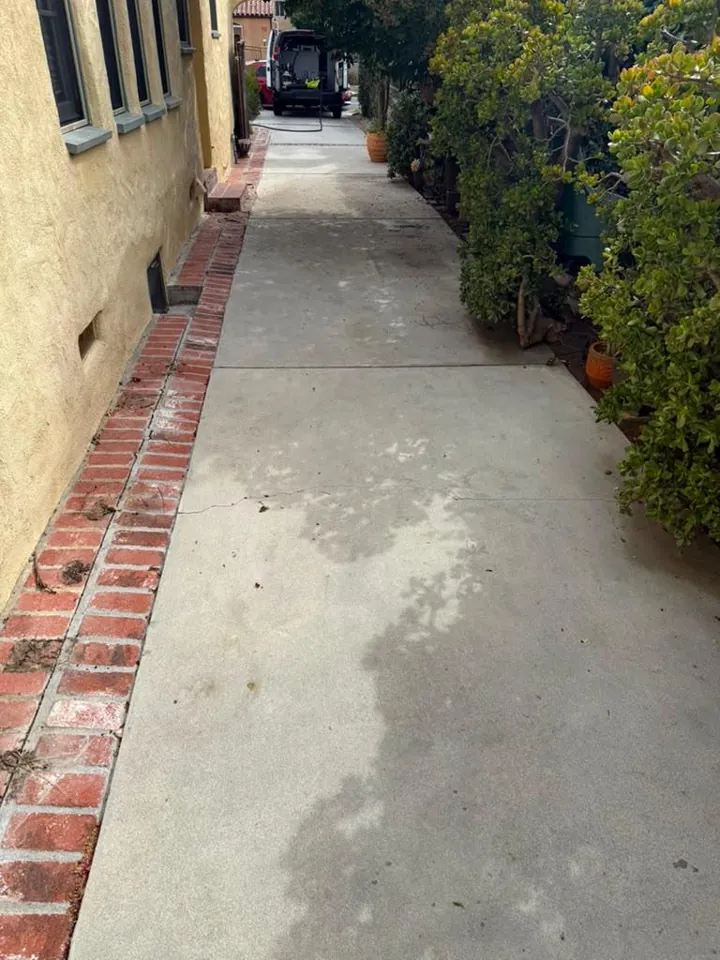
Myths about why concrete darkens
A common idea is that concrete simply oxidizes or ages to gray, the way metal rusts. Concrete does weather. The fine cement paste on top can wear away and expose more sand and aggregate, which changes the texture and look. But that is wear, not darkening, and it usually makes the surface lighter and rougher, not darker.
Another myth is that dark concrete is always water damage. Concrete does look darker when damp, and areas that stay wet from sprinklers or poor drainage often grow organic film. The fix there is both cleaning and dealing with the water source.
Hard water adds its own layer. Sprinklers that hit paving leave mineral deposits as the water evaporates, which can look like a dull, chalky haze. Mixed with dust, those deposits make the slab look gray and tired, and they often need a different cleaner than organic dirt does.
What cleaning restores and what it does not
A proper clean usually removes embedded dust, organic growth and road film. The process is pre-treatment with a suitable cleaner, enough dwell time for it to work, then a rotary surface cleaner for even results, and a top-down rinse. Most slabs come out noticeably lighter and more even.
Some things only lighten. Old oil stains, deep rust, tannin from leaves that sat for a season, and tire marks that have been baked in by summer heat may fade but not disappear. Patchy color from different concrete pours, repairs or curing will stay. And surface wear, spalling or cracks are not cleaning problems at all. Our guide on concrete brightening covers optional treatments that even out color after cleaning.
How fast it comes back
Concrete starts collecting dirt again from day one. How quickly it looks gray again depends on shade, traffic, trees and sprinklers. A sunny front driveway may look good for a long time, while a shaded side yard can regrow film within a single rainy season.
Simple habits help. Sweep or blow off leaves and dust before they sit, wipe up oil drips quickly, and adjust sprinklers that spray onto paving. A penetrating sealer can slow how fast dirt soaks in, though it does not stop it completely.
Cost to bring it back
As of October 2026, driveway cleaning on our calculator is $0.50 per square foot, walkways and sidewalks are $0.55, and patios are $0.65, with a $195 minimum per visit. Booking two of these together takes 5% off, and three or more takes 10%.
At Say Wash It we tell you upfront which marks are likely to come out and which may only lighten, and the flat price is confirmed before work begins. The instant quote on this page gives you a starting number in a minute.
Key points
The short answer: it is mostly dirt in the pores
Concrete is porous. Its surface is full of tiny openings that take in fine dust, oils and organic matter. Over months and years those particles build up until the whole slab looks a shade or two darker. The color of the cement itself has usually not changed much.
What cleaning restores and what it does not
A proper clean usually removes embedded dust, organic growth and road film. The process is pre-treatment with a suitable cleaner, enough dwell time for it to work, then a rotary surface cleaner for even results, and a top-down rinse. Most slabs come out noticeably lighter and more even.